


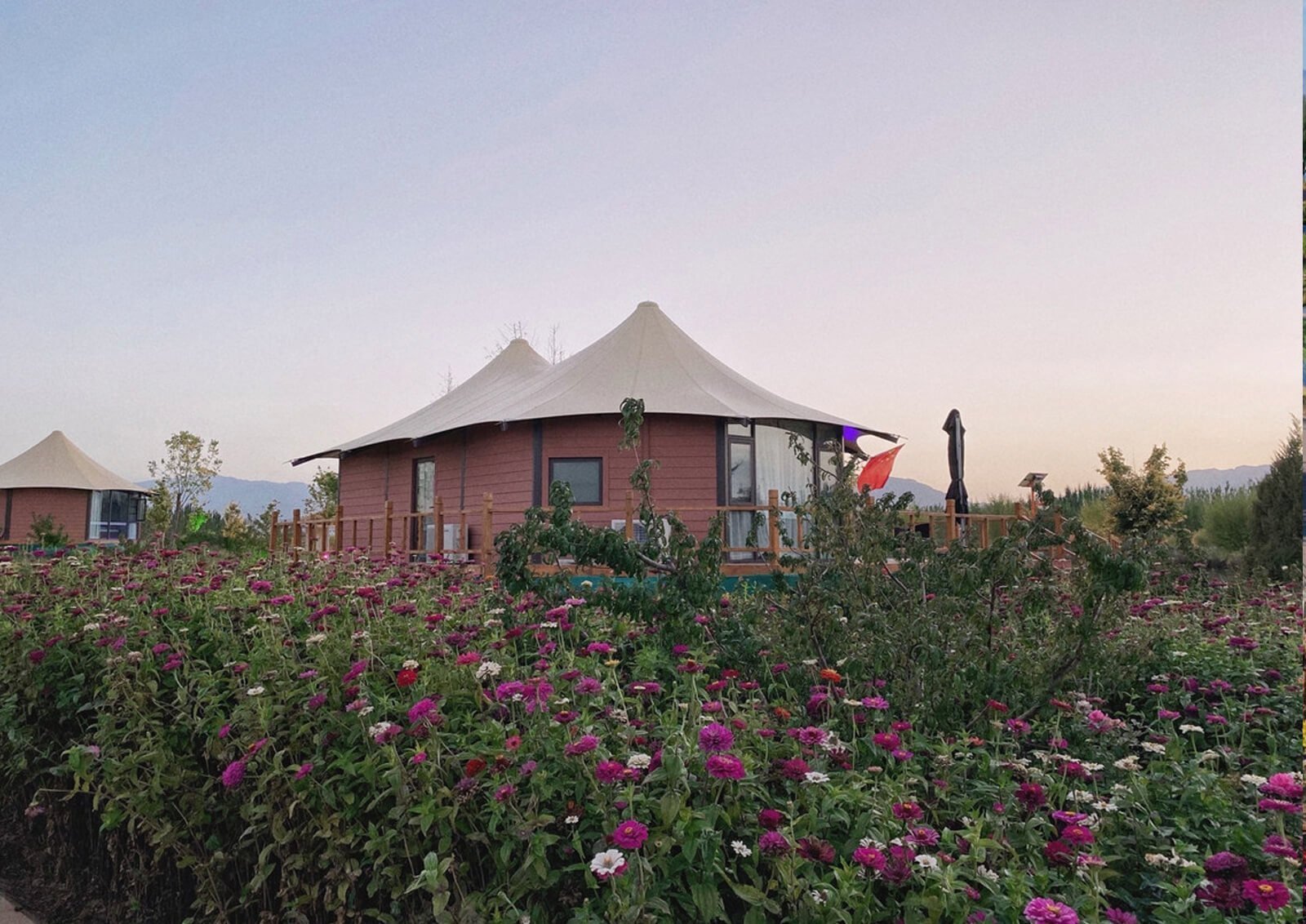
Glamping tents prioritize privacy for campers through various design features and strategic placement. Here’s how they achieve this:
Tent Layout and Spacing
- Increased Spacing: Glamping sites often position tents further apart compared to traditional camping setups. This spacing minimizes the likelihood of neighbors intruding on each other’s privacy, allowing guests to enjoy a more exclusive experience.
- Natural Barriers: Many glamping sites utilize natural elements like trees, shrubs, or landscaping to create visual barriers between tents. This not only enhances privacy but also integrates the tents harmoniously into the surrounding environment.
Design Features
- Curtain Systems: Glamping tents frequently include adjustable curtains or screens at windows and entrances. Guests can easily draw these curtains to block outside views and control light, enhancing their sense of seclusion.
- Multi-layer Tarpaulin: Some glamping tents are designed with multi-layer tarpaulins that provide insulation and soundproofing. This design helps reduce external noise and visual intrusion, creating a quieter and more private atmosphere inside the tent.
Location Selection
- Secluded Areas: Glamping tents are typically located in more secluded areas, such as forests or near lakes, away from crowded campgrounds. This strategic placement allows guests to relax without the disturbances associated with larger camping sites.
Security Measures
- Access Control: Many glamping sites incorporate security features such as smart locks or keyless entry systems, ensuring that only authorized individuals can access the tents. This adds an extra layer of security and privacy for guests.
By combining thoughtful design with strategic site planning, glamping tents effectively ensure that campers can enjoy their outdoor experience without compromising on privacy.
